Hydraulic Steel Push Pier Underpinning in Scottsdale, AZ
When expansive desert clay causes differential settlement in residential footers, concentric hydraulic steel push piers provide the permanent engineering remedy. Driven through unsettled soil strata until reaching non-yielding bedrock or load-bearing strata, push piers transfer the structural weight of your Scottsdale home off unstable soil and onto permanent geological anchor points.
Permanent Bedrock Foundation Underpinning
Concentric push pier systems utilize high-strength structural steel pipe sections hydraulically driven into the earth beneath existing footing brackets. Using the structure's own mass as continuous reaction force, individual pier sections are driven deep through unstable Sonoran topsoil until encountering load-bearing rock or dense caliche.
Concentric Dual-Bracket Underpinning
Aligns the lifting ram directly beneath the footing centerline, eliminating eccentric rotational stress during stabilization.
Hydraulic Manifold Elevation Recovery
Synchronized multi-cylinder lifting to gently elevate settled framing back toward original datum without cracking finish drywall.
Heavy-Duty Bracket Anchoring
Industrial-grade cast steel brackets permanently bolted to reinforced footers with grade-8 structural hardware.
Warning Signs Requiring Steel Pier Stabilization
Recognize these indications in your Scottsdale residence. Each represents a predictable response to sub-surface soil shifting.
Indicator: Exterior Brick & Stucco Stair-Step Cracking
Permanent Remedy: Stops ongoing footer settlement and allows exterior masonry joints to be re-mortared without recurring separation.
Indicator: Severe Interior Drywall Header Fractures
Permanent Remedy: Relieves structural torsion across door and window openings by supporting the settled wall foundation from bedrock.
Indicator: Separation Between Ceiling and Framing
Permanent Remedy: Arrests vertical downward displacement before roof trusses experience structural deflection.
Industrial Underpinning Hardware & Alloy Specifications
Hardware components and chemical formulations selected specifically for long-term endurance in desert conditions.
Schedule 80 Heavy-Wall Steel Tubing
High-yield carbon steel tubing engineered for extreme axial compression loads in aggressive soil environments.
Hot-Dip Galvanized Zinc Coating
ASTM A123 corrosion resistance shielding steel from desert soil alkalinity and subterranean moisture.
Precision Mechanical Locking Collars
Heavy-duty locking rings that secure pier elevation mechanically without relying on continuous hydraulic pressure.
Property Types Requiring Push Pier Engineering
Calibrated execution tailored to residential estates, communities, and commercial facilities.
Luxury Single-Family Desert Residences
Custom foothills estates experiencing localized footer drops due to perimeter irrigation or slope runoff.
Single-Story Sonoran Ranch Homes
Traditional shallow footing designs vulnerable to cyclical monsoon saturation and drying.
Multi-Family Residential Structures
Apartments and townhomes requiring non-disruptive exterior underpinning without interior floor demolition.
Engineering Factors Influencing Pier Depth & Load Capacity
Key geological and structural variables evaluated during our initial on-site CAD elevation survey.
Depth to Competent Bedrock Strata
In Scottsdale, bedrock depth typically varies between 18 and 42 feet depending on distance from mountain washes.
Structural Weight & Footer Dimensions
Heavy masonry construction generates higher reactive driving force, facilitating optimal pier penetration.
Caliche Density & Hardpan Layers
Sub-surface cemented calcium carbonate layers must be penetrated or load-tested to confirm permanent stability.
Why Scottsdale Soils Demand Deep Steel Piering
Scottsdale's geological profile is characterized by Quaternary alluvium deposits intermixed with smectite expansive clays. During prolonged 115°F summer heatwaves, perimeter soil desiccation shrinks the earth away from footings. Subsequent monsoon deluges cause rapid expansion, inducing cyclical differential settlement that only deep steel underpinning anchored into bedrock can permanently resolve.
How the Hydraulic Steel Push Piering Process Works
A clear, disciplined 5-stage progression from initial phone dispatch to certified project sign-off.
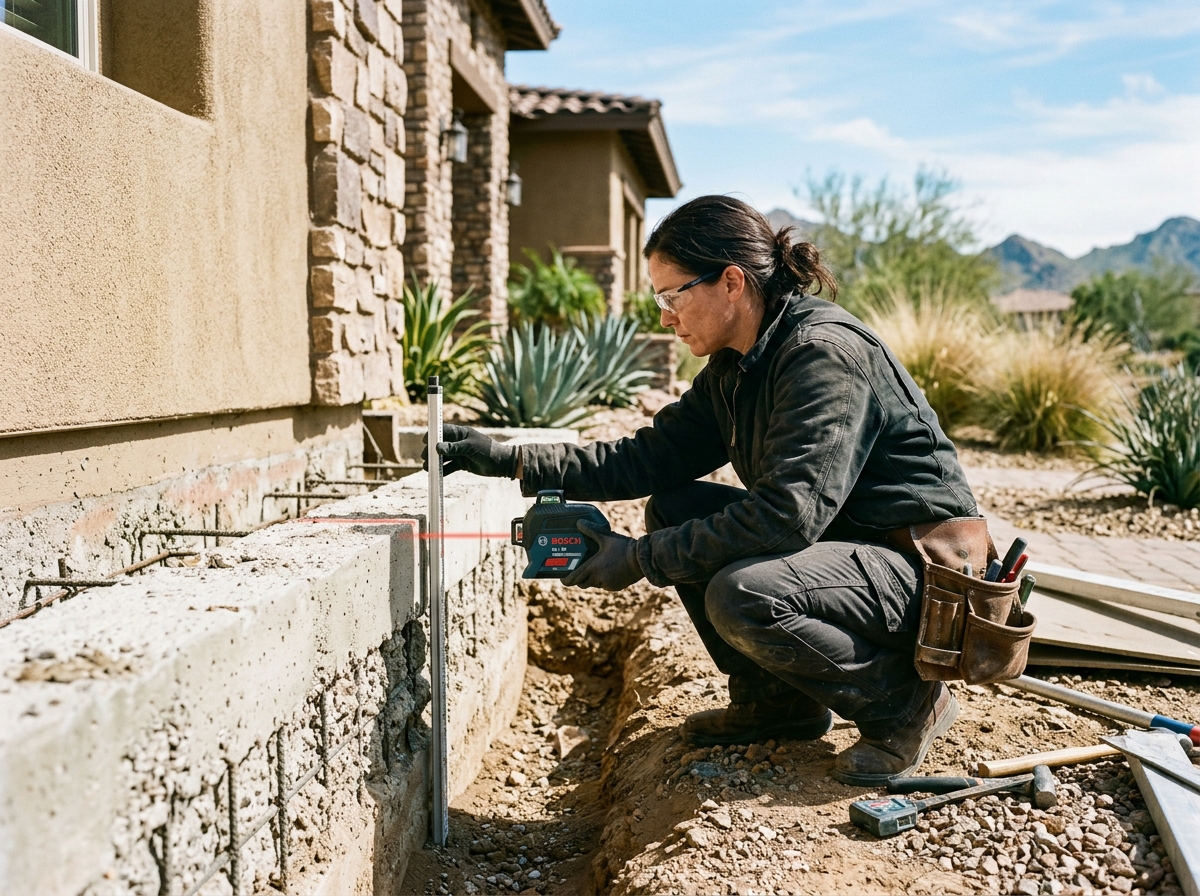
Engineering Laser Elevation Survey
Digital zip-level mapping establishes exact baseline elevations across all footing corners.
Excavation & Footing Preparation
Hand-excavated 3x3 foot pits expose the underside of the structural footer without heavy lawn damage.
Bracket Mounting & Hydraulic Driving
Industrial steel brackets are secured, and interlocking steel sections are driven to load-bearing refusal.
Synchronized Hydraulic Lift
Manifold hydraulic rams gently transfer structural load and restore elevation tolerances.
Mechanical Locking & Soil Backfill
Permanent collars lock the system in place before soil is re-compacted to native grade.
Homeowner Preparation Before Technicians Arrive
- ✓ Ensure clear 4-foot perimeter access along the exterior foundation line.
- ✓ Mark private underground irrigation lines or outdoor landscape wiring.
- ✓ Secure domestic pets away from exterior excavation work zones.
Cost & Scope Determinants for Push Pier Projects
Underpinning project investment is determined by the total number of pier brackets required, the depth to competent load-bearing strata (measured in linear feet of driven steel), and site accessibility for hydraulic equipment. Written itemized engineering estimates are provided on-site following complete laser deflection mapping.
Ready to Schedule Your Hydraulic Steel Push Piering Diagnostic Survey?
Speak directly with dispatch. We review your foundation symptoms calmly and schedule a digital on-site CAD elevation mapping.
Recent Hydraulic Steel Push Piering Projects Across Scottsdale
Completed field repairs documenting our commitment to non-invasive techniques, strict code compliance, and structural permanence across Maricopa County.
Residential Elevation Correction & Structural Stabilization
Following laser CAD deflection mapping that documented 1.4 inches of perimeter footer drop, our crew deployed Hydraulic Steel Push Piering protocols. Full elevation recovery was achieved, closing drywall stress cracks and restoring permanent structural foundation balance.
Where We Provide Hydraulic Steel Push Piering
Our specialized crews deliver prompt dispatch to homes and estates throughout these premier communities:
Frequently Asked Questions About Hydraulic Steel Push Piering
Direct answers to common homeowner questions regarding duration, warranties, and engineering methods.
How deep do steel push piers need to go in Scottsdale?
Pier depths in Scottsdale commonly range between 18 and 35 feet, though hillside areas near Camelback or McDowell Mountains may encounter bedrock sooner or require deeper penetration through alluvial gravel.
Will installing steel push piers disrupt my landscaping?
Excavation is localized to precise 3x3 foot openings directly at footing locations. Turf and decorative rock are carefully set aside on tarps and neatly restored upon project completion.
Can push piers lift my home back to its original level?
In most residential scenarios, hydraulic manifold systems achieve substantial elevation recovery, closing drywall cracks and freeing sticking doors while respecting structural framing limits.
How long does a typical steel piering project take?
Most residential push pier installations involving 6 to 12 piers are completed within 2 to 4 working days from initial excavation to clean backfill.
How do you know when a pier reaches solid bedrock?
Hydraulic pressure gauges monitor driving resistance continuously. When pressure reaches 1.5 to 2 times the required structural load without further downward movement, bedrock refusal is verified.
Restore Permanent Quiet to Your Scottsdale Foundation
Speak directly with our local geotechnical dispatch team today. Schedule an unhurried, objective CAD elevation survey.
Monday–Sunday, Open 24 Hours • Fully Licensed & Insured Technicians