Helical Pier Underpinning & Tieback Systems in Scottsdale, AZ
Helical piers utilize high-tensile steel shafts equipped with circular screw plates that are mechanically rotated into sub-surface soil strata. Because helical piers do not rely on the weight of an existing structure for installation force, they are the preferred engineering solution for lightweight additions, stem wall stabilization, retaining wall tiebacks, and pre-construction stabilization across Scottsdale.
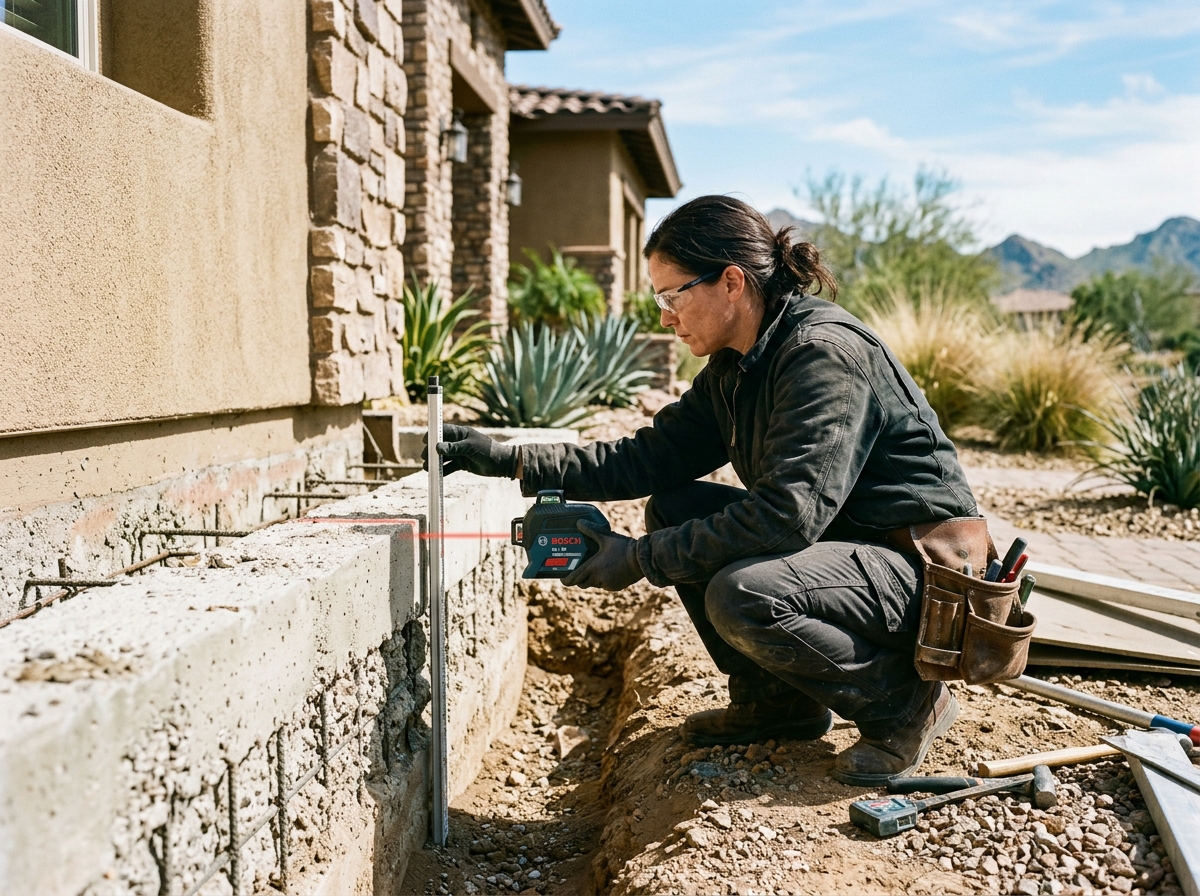
Engineered Torque-Monitored Rotational Underpinning
Hydraulic drive heads rotate helical screw anchors deep into undisturbed soil layers. Continuous torque monitoring during rotation correlates directly with geotechnical bearing capacity, providing real-time mathematical verification of structural load support before any weight is transferred.
Round Shaft Helical Piers
Superior resistance to lateral soil movement and bending forces in expansive clay soils.
Square Shaft Helical Screws
High-torque capacity designed to penetrate dense rocky caliche layers without shaft twisting.
Helical Retaining Wall Tiebacks
Horizontal screw anchors stabilizing bowing basement walls and exterior hillside retaining structures.
Foundation Challenges Resolved by Helical Piers
Recognize these indications in your Scottsdale residence. Each represents a predictable response to sub-surface soil shifting.
Indicator: Patio & Deck Post Settlement
Permanent Remedy: Provides immediate vertical support for exterior shade structures and pergolas without waiting for concrete to cure.
Indicator: Retaining Wall Inward Tilting
Permanent Remedy: Horizontal helical anchors tie back into stable earth behind failure zones, arresting lateral soil pressure.
Indicator: Lightweight Room Addition Subsidence
Permanent Remedy: Installed without structural reaction mass, supporting lighter architectural extensions permanently.
Helical Blade & Shaft Metallurgy
Hardware components and chemical formulations selected specifically for long-term endurance in desert conditions.
True-Helix Bearing Plates
Precision-stamped steel plates spaced to avoid soil shearing during rotational advance.
Hot-Dip Galvanized Protection
Heavy zinc coatings preventing galvanic reaction with acidic or alkaline desert minerals.
High-Strength Tubular Shaft Couplings
Bolted structural couplers maintaining continuous shaft rigidity at depths exceeding 30 feet.
Target Installations for Helical Systems
Calibrated execution tailored to residential estates, communities, and commercial facilities.
Hillside View Homes & Cantilever Decks
Custom residences requiring stable foundational support along steep desert ridge lines.
Detached Guest Casitas & Garages
Lightweight accessory dwelling units requiring deep foundation support prior to framing.
Commercial Retaining & Drainage Walls
Commercial perimeter retention structures subject to hydrostatic pressure.
Key Rotational Torque Factors
Key geological and structural variables evaluated during our initial on-site CAD elevation survey.
Torque-to-Capacity Ratio (Kt factor)
Empirical engineering correlation calculating ultimate soil capacity from installation foot-pounds.
Blade Helix Pitch & Diameter
Configurations tailored to soil density, from 8-inch pilot plates to 14-inch deep load plates.
Subsurface Boulders & Caliche
Dense caliche requires high-torque planetary drives to achieve targeted embedment depth.
Scottsdale Geotechnical Application
In North Scottsdale and Foothills neighborhoods, building lots frequently feature steep topography and uneven bedrock depths. Helical piers offer exceptional flexibility in these environments because installation equipment can access tight side yards and terrace elevations where large drilling rigs cannot operate.
How the Helical Pier Installation Process Works
A clear, disciplined 5-stage progression from initial phone dispatch to certified project sign-off.
Torque Specification & Site Survey
Engineers calculate required installation torque based on expected structural loading.
Drive Head Alignment
Hydraulic planetary drive heads align the lead helical section at predetermined engineering angles.
Continuous Rotational Advancement
Shafts are rotated into earth with digital torque readings recorded at every one-foot increment.
Bracket Installation & Load Transfer
Structural brackets connect the torqued helical shaft to the building footer.
Site Restoration
Work areas are neatly compacted and restored to clean residential standards.
Homeowner Checklist Before Helical Installation
- ✓ Provide unobstructed 36-inch gate access for mini-track installation machinery.
- ✓ Ensure exterior water spigots and electrical outlets are functional on-site.
- ✓ Relocate delicate patio furniture and potted plants away from the work zone.
Project Cost Influences
Helical pier pricing correlates with shaft diameter, blade configuration, total depth required to achieve engineering torque, and accessibility. Detailed proposals outline all hardware specifications and depth contingencies in advance.
Ready to Schedule Your Helical Pier Installation Diagnostic Survey?
Speak directly with dispatch. We review your foundation symptoms calmly and schedule a digital on-site CAD elevation mapping.
Recent Helical Pier Installation Projects Across Scottsdale
Completed field repairs documenting our commitment to non-invasive techniques, strict code compliance, and structural permanence across Maricopa County.
Residential Elevation Correction & Structural Stabilization
Following laser CAD deflection mapping that documented 1.4 inches of perimeter footer drop, our crew deployed Helical Pier Installation protocols. Full elevation recovery was achieved, closing drywall stress cracks and restoring permanent structural foundation balance.
Where We Provide Helical Pier Installation
Our specialized crews deliver prompt dispatch to homes and estates throughout these premier communities:
Frequently Asked Questions About Helical Pier Installation
Direct answers to common homeowner questions regarding duration, warranties, and engineering methods.
What makes helical piers different from push piers?
Helical piers are screwed into the ground using hydraulic rotating equipment, meaning they do not require a heavy building to push against. Push piers use the weight of the home to push smooth steel into the ground.
How is bearing capacity verified during installation?
Technicians monitor hydraulic pressure gauges that measure rotational torque continuously. The higher the torque resistance, the denser the soil and the greater the load capacity.
Can helical piers be used to stabilize leaning retaining walls?
Yes. When installed horizontally or at a mild downward angle, helical tieback anchors pull retaining walls back into alignment and resist lateral earth pressure.
Are helical piers noisy or disruptive to install?
No. Unlike driven pilings that rely on percussion hammer impacts, helical piers rotate smoothly and quietly into the soil with minimal neighborhood disruption.
How deep do helical piers usually penetrate in North Scottsdale?
Depths typically reach between 15 and 28 feet before reaching target engineering torque in dense native soils.
Restore Permanent Quiet to Your Scottsdale Foundation
Speak directly with our local geotechnical dispatch team today. Schedule an unhurried, objective CAD elevation survey.
Monday–Sunday, Open 24 Hours • Fully Licensed & Insured Technicians