Hillside Retaining Wall Tiebacks & Helical Anchors in Scottsdale, AZ
Retaining walls on steep desert slopes face tremendous lateral earth pressure, hydrostatic loading from monsoon flash floods, and natural downhill slope creep. When retaining walls begin to tilt forward, bow inward, or separate at structural joints, failure is inevitable without deep lateral stabilization. Helical tieback anchors are driven deep into unyielding mountain bedrock behind the wall, pulling it back plumb.
High-Capacity Bedrock Tieback Anchoring
Helical tiebacks consist of high-tensile steel shafts with circular screw plates driven horizontally or at a downward angle through core-drilled holes in retaining walls. Extending past the active failure plane into stable bedrock or dense soil, tiebacks are locked to the wall face with heavy steel bearing plates and torqued to resist tens of thousands of pounds of lateral pressure.
Helical Screw Earth Tiebacks
Rotary-driven anchors penetrating deep soil and fractured rock behind failing walls.
Drilled & Grouted Rock Anchors
Socketed directly into solid granite mountain bedrock for maximum lateral tensile capacity.
Hydraulic Wall Alignment Recovery
Carefully tensioning tieback rods to pull leaning retaining walls back toward vertical alignment.
Retaining Wall Failures Corrected
Recognize these indications in your Scottsdale residence. Each represents a predictable response to sub-surface soil shifting.
Indicator: Retaining Wall Tilting Forward Downhill
Permanent Remedy: Arrests forward rotation and anchors the wall face into stable subterranean geology.
Indicator: Horizontal Cracks Along Masonry Blocks
Permanent Remedy: Distributes lateral soil forces across multiple steel anchor plates, preventing wall shear.
Indicator: Separation of Terraced Backyard Walls
Permanent Remedy: Prevents catastrophic wall collapse that threatens swimming pools and home foundations.
Tieback Hardware Metallurgy
Hardware components and chemical formulations selected specifically for long-term endurance in desert conditions.
High-Yield Round Corner Square Steel Shafts
Solid steel shafts engineered for exceptional torque and ultimate tensile strength.
Hot-Dip Galvanized Zinc Coating
ASTM A153 corrosion protection shielding steel from aggressive alkaline desert minerals.
Heavy Structural Steel Wall Plates
Recessed architectural bearing plates distributing pull force across masonry blocks.
Hillside Properties Requiring Tiebacks
Calibrated execution tailored to residential estates, communities, and commercial facilities.
Luxury Ridge-Line Custom Estates
Residences on Camelback Mountain, Troon Mountain, and Silverleaf hillside perimeters.
Cantilever Infinity Pool Structures
Suspended pool decks requiring deep rock-socketed vertical and lateral retention.
Commercial Retaining & Drainage Walls
Commercial perimeter retention structures subject to hydrostatic pressure.
Retaining Wall Engineering Standards
Key geological and structural variables evaluated during our initial on-site CAD elevation survey.
Active Failure Plane Distance
Tieback helical plates must penetrate at least 10 feet past the natural 45-degree earth shear plane.
Installation Torque Correlation
Hydraulic torque readings mathematically prove holding capacity before final tensioning.
Hydrostatic Weep Hole Drainage
Installing fresh drainage weep ports relieves trapped water behind the stabilized wall.
Scottsdale Hillside Earth Pressure Dynamics
In North Scottsdale and Foothills neighborhoods, building lots frequently feature steep topography and uneven bedrock depths. During monsoon storms, decomposed granite backfill becomes fully saturated, doubling in weight and exerting severe outward hydrostatic pressure against masonry walls.
How the Hillside Retaining Tiebacks Process Works
A clear, disciplined 5-stage progression from initial phone dispatch to certified project sign-off.
Structural Plumb & Pressure Survey
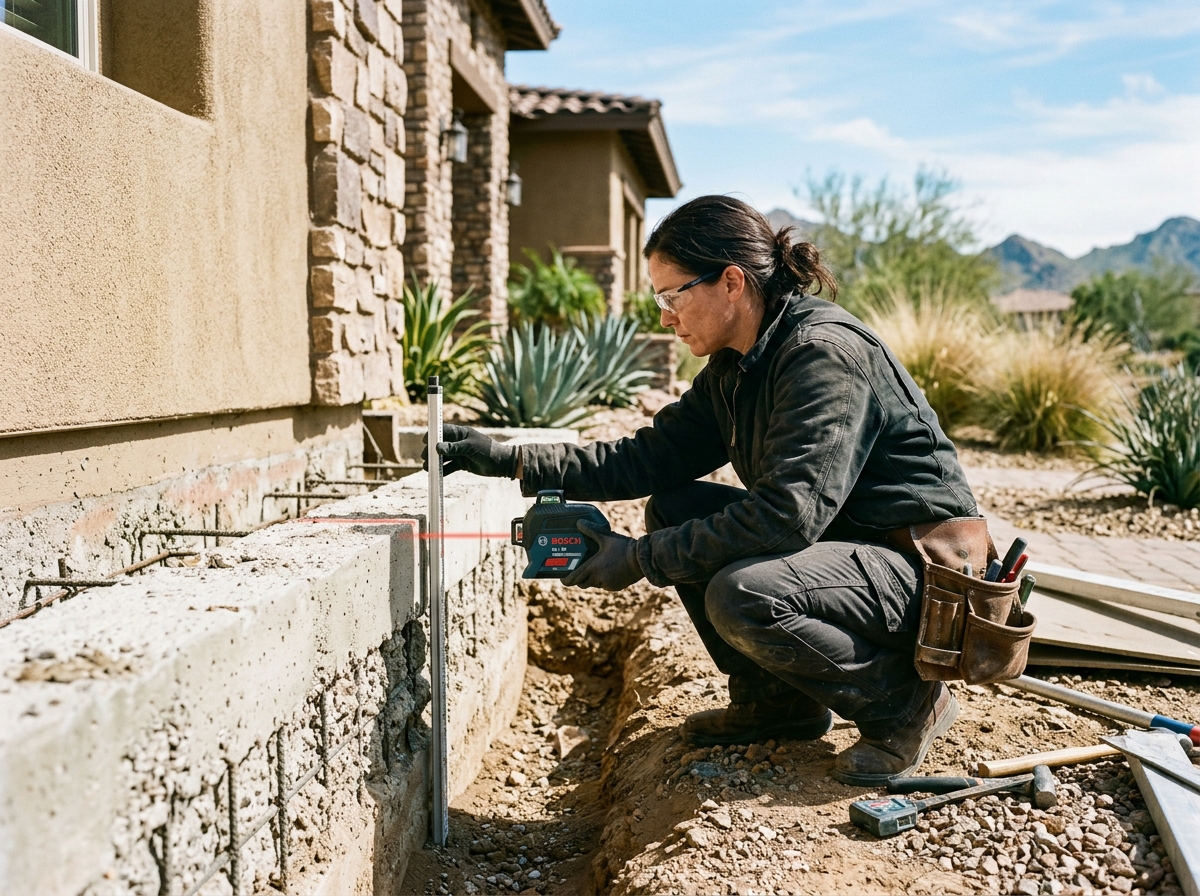
Laser measurements determine wall tilt angles and calculate required anchor capacities.
Core-Drilling Access Ports
Small 4-inch holes are core-drilled through the masonry retaining wall face.
High-Torque Helical Driving
Hydraulic equipment rotates helical shafts through the wall into stable hillside earth.
Bearing Plate Mounting & Tensioning
Heavy steel plates are installed on the wall face and hydraulic rams tension the anchor rods.
Wall Alignment & Grout Finishing
The wall is pulled back toward plumb and anchor plates are finished with protective coatings.
Homeowner Preparation for Tieback Installation
- ✓ Provide clear access along the base and top of the retaining wall for installation machinery.
- ✓ Mark any underground landscape drip irrigation lines running behind the retaining wall.
- ✓ Ensure pool equipment or exterior air conditioners near the wall are protected.
Tieback Pricing Variables
Pricing depends on wall height, total length, degree of forward tilt, number of anchor points specified by engineering calculations, and depth required to reach stable bedrock.
Ready to Schedule Your Hillside Retaining Tiebacks Diagnostic Survey?
Speak directly with dispatch. We review your foundation symptoms calmly and schedule a digital on-site CAD elevation mapping.
Recent Hillside Retaining Tiebacks Projects Across Scottsdale
Completed field repairs documenting our commitment to non-invasive techniques, strict code compliance, and structural permanence across Maricopa County.
Residential Elevation Correction & Structural Stabilization
Following laser CAD deflection mapping that documented 1.4 inches of perimeter footer drop, our crew deployed Hillside Retaining Tiebacks protocols. Full elevation recovery was achieved, closing drywall stress cracks and restoring permanent structural foundation balance.
Where We Provide Hillside Retaining Tiebacks
Our specialized crews deliver prompt dispatch to homes and estates throughout these premier communities:
Frequently Asked Questions About Hillside Retaining Tiebacks
Direct answers to common homeowner questions regarding duration, warranties, and engineering methods.
Can tieback anchors straighten a wall that is already leaning?
Yes. In many situations, excavating soil slightly behind the wall allows our hydraulic tensioning jacks to pull the retaining wall back toward its original vertical plumb position.
How does installing tiebacks compare to rebuilding the retaining wall?
Installing tieback anchors is typically 60% to 75% less expensive than tearing down and rebuilding a massive hillside retaining wall, while avoiding major landscape destruction.
How deep do the tieback anchors go into the hillside?
Tiebacks typically penetrate between 15 and 35 feet into the hillside behind the wall to anchor deep into undisturbed earth or solid bedrock beyond the failure plane.
Will the anchor plates on the front of my wall look unsightly?
We offer low-profile architectural bearing plates that can be countersunk and stuccoed over, or color-matched to your wall's finish so they blend seamlessly with your landscape.
How long will helical tieback anchors last?
Manufactured from heavy hot-dip galvanized steel, our helical tiebacks are engineered for a design lifespan exceeding 75 to 100 years.
Restore Permanent Quiet to Your Scottsdale Foundation
Speak directly with our local geotechnical dispatch team today. Schedule an unhurried, objective CAD elevation survey.
Monday–Sunday, Open 24 Hours • Fully Licensed & Insured Technicians